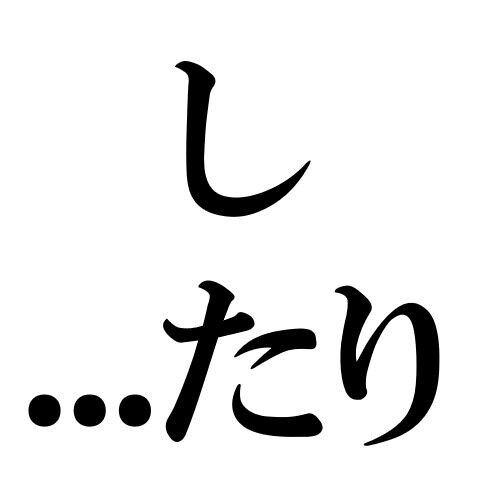
Japanese Grammar: Expressing Multiple Reasons, Actions or States 「し」「...たりする」

Expressing Multiple Reasons, Actions or States

Before starting the exercise for expressing multiple reasons, actions or states 「し」「...たりする」, please clarify any doubts you may have about the grammatical rules by referring to your grammar guidebook or dictionary. The Instantaneous Composition Method requires you to compose sentences with the target sentence pattern(s) over and over in order to use them almost effortlessly. You should already have the necessary knowledge.

Reference
Genki I and II - Lesson 11: ~たり~たりする and Lesson 12: ~し
Tae Kim's Guide - Compound Sentences

Instantaneous Composition Exercise for Expressing Multiple Reasons, Actions or States 「し」「...たりする」

This is not a translation exercise. This is the Instantaneous Composition Exercise. As if a reflexive action, try to create an equivalent Japanese sentence shortly after reading an English script. Try not to think for more than three seconds.

Natural Speed with Pauses

English and Hidden Japanese Scripts

Why did (you) buy that book? => Because (it’s) famous and cheap (among other things).
どうしてその本ほんを買かったんですか? => 有名ゆうめいだし、安やすいからです。
Why did (you) buy that bicycle? => Because (it’s) useful and necessary (among other things).
どうしてその自じ転車てんしゃを買かったんですか? => 便べん利りだし、必要ひつようだからです。
Why do (you) like tomatoes? => Because (they’re) sweet and delicious (among other things).
どうしてトマトが好すきなんですか? => 甘あまいし、美味おいしいからです。
Why do (you) dislike Shimizu-san? => Because (he) often cries and gets angry (among other things).
どうして清し水みずさんが嫌きらいなんですか? => よく泣なくし、怒おこるからです。
Why are (you) always energetic? => Because (I) sometimes run and swim (among other things).
どうしていつも元げん気きなんですか? => ときどき走はしるし、泳およぐからです。
(I will) do things like watching movies and reading books (among other things) tomorrow. 
明日あしたは映えい画がを見みたり、本ほんを読よんだりします。
(I) do things like studying and running (among other things) on my days off.
休やすみの日ひは勉べん強きょうしたり、走はしったりします。
(I) don’t do things like eating and drinking (among other things) in the mornings.
朝あさは食たべたり、飲のんだりしません。 
Japanese is sometimes easy, sometimes difficult (and other times something else).
日に本ほん語ごは簡単かんたんだったり、難むずかしかったりします。
School is sometimes fun, sometimes not fun.
学校がっこうは楽たのしかったり、楽たのしくなかったりします。

Recommended Links

Next Lesson

Table of Content

How to Proceed with the Instantaneous Composition Method