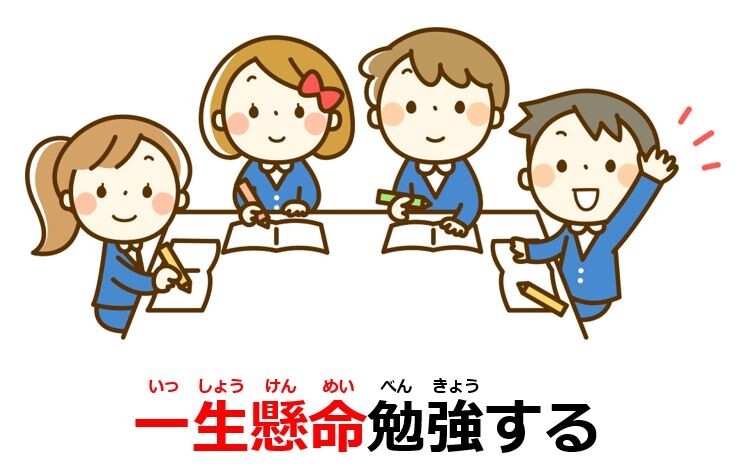
Last time, you learned relative clauses in order to give nouns more contexts. Thereby, you can express “Bob will study Japanese” by means of a noun clause: 日本語を勉強するボブ (Bob who will study Japanese). Then, what should you do if you’d like to say “Bob will study Japanese very hard?” In this lesson, you will learn how to use Japanese adverbs.
Explanation for How Japanese Adverbs Work
Adverbs basically modify verbs, adjectives, and other adverbs. Unlike English adverbs, Japanese ones can be placed anywhere in sentences if they appear before verbs. Let’s go over how it works for each function.
|
Table of Contents
[Adverbs of Manner]
[Adverbs of Degree]
[Other Adverbs of Degree]
[Others]
[Summary]
|
Adverbs of Manner
When you swim in the sea, you can swim fast, slowly, well, very hard, etc. These types of adverbs give such contexts and thus they are generally used for verbs.
| [私は / が] | 一生懸命 | 日本語を | 勉強 する / します |
| [Topic / Subject] | Adverb | Direct Object | Verb |
| [I will] study Japanese very hard. | |||
In the above example, “一生懸命 : very hard” modifies “勉強する: to study.” Regardless of where the adverb is placed, the meaning won’t change. The followings have the same meanings.
| 一生懸命 [私は / が] 日本語を勉強(する / します)。 |
| [私は / が] 日本語を一生懸命 勉強(する / します)。 |
Adjectives Treated as Adverbs
You can let adjectives work as adverbs of manner. Almost all of the adjectives can become adverbs. Here are the conjugation rules.
I-adjectives: To Replace い with く
| Words | Adjectives | Adverbs |
|---|---|---|
| strong | 強い | 強く |
| weak | 弱い | 弱く |
| early, quick | 早い | 早く |
| fast, quick | 速い | 速く |
| cute, pretty | かわいい | かわいく |
Na-adjectives: To Add に instead of な
| Words | Adjectives | Adverbs |
|---|---|---|
| well, good | 上手な | 上手に |
| poor | 下手な | 下手に |
| eager, enthusiastic | 熱心な | 熱心に |
| serious | 真面目な | 真面目に |
| healthy, lively | 元気な | 元気に |
That’s very simple and useful, isn’t it? One point you should know is that some adverbs that are not related to adjectives end with に. The following is a list for general adverbs. You need to remember each vocabulary term, however, the usage remains the same.
Adverbs Not Related to Adjectives
| 一生懸命 | very hard |
| ゆっくり | slowly |
| のんびり | quietly, freely, leisurely |
| だんだん | gradually, little by little |
| 徐々に | gradually, little by little |
| 次々(に) | in succession |
Here, let's take some more sentence examples.
| 彼女はかわいく(笑う / 笑います)。 [My] girlfriend cutely smiles. |
| 歌を元気に(歌う / 歌います)。 [I will] sing songs lively. |
| 日本語をゆっくり(話す / 話します)。 [I will] speak Japanese slowly. |
| のんびり温泉に(入る / 入ります)。 [I will] leisurely go into a hot spring. |
Adverbs of Degree
These type of adverbs can express degree, however they will not necessarily be used only for adjectives. For example, the noun: 美人 means “good-looking woman” and the verb: 疲れる means “to be tired.” You can express how beautiful and tired she is by using adverbs.
| 佐藤さん は / が | とても | きれい(だ / です) |
| Topic / Subject | Adverb | Predicate (Adjective) |
| Sato-san is very beautiful. | ||
| 佐藤さん は / が | とても | 美人(だ / です) |
| Topic / Subject | Adverb | Predicate (Noun) |
| Sato-san is a very good-looking woman. | ||
| バスケットボールは | とても | 疲れる / 疲れます |
| Topic | Adverb | Verb |
| As for basketball, [I will] be very tired. | ||
Again, since Japanese adverbs can be placed anywhere in sentences if they appear before verbs, the following is also correct and has the same meaning as the examples above.
| とても佐藤さんはきれい(だ / です)。 |
| とても佐藤さんは美人(だ / です)。 |
| とてもバスケットボールは(疲れる / 疲れます)。 |
Vocabulary List
We have made this in descending order and put English translations if similar ones are available. Note: Translation between languages cannot be perfect, e.g. “very” appears several times.
High
| 極めて | extremely |
| 非常に | very much |
| 実に 本当に |
really *本当に is colloquial |
| とても | very |
| 大変 | very |
| ずいぶん | very |
Middle
| かなり | fairly |
| 相当 | considerably |
| だいぶ | quite |
Low
| なかなか | quite |
| まあまあ | passably |
| そこそこ | reasonably |
| たいして* | not very |
| あまり* | not very |
| ぜんぜん* | not at all |
*They have to be with negative forms.
Other Adverbs of Degree
Adverbs of degree can be further subdivided. We have listed them here for your reference. Since the usage remains the same, you can use them in the way you have learned so far.
Frequency
| [私は / が] | よく | 図書館に | 行く / 行きます |
| [Topic / Subject] | Adverb | Destination | Verb |
| [I] often go to the library. | |||
| 明日 は / が | ときどき | 雨(だ / です) |
| Topic / Subject | Adverb | Predicate |
| As for tomorrow, [it will] sometimes rain. | ||
Vocabulary List in Descending Order
| いつも | always |
| 普通(は) 普段(は) |
usually |
| よく しょっちゅう たびたび |
often |
| ときどき | sometimes |
| たまに | occasionally |
| あまり* | rarely |
| めったに* | hardly |
*They have to be with negative forms.
Level of Certainty
| [私は / が] | 絶対に | 日本語を | 勉強 する / します |
| [Topic / Subject] | Adverb | Direct Object | Verb |
| [I will] definitely study Japanese. | |||
| 明日 は / が | 必ず | 晴れ(だ / です) |
| Topic / Subject | Adverb | Predicate |
| As for tomorrow, [it] will be sunny without exception. | ||
Vocabulary List in Descending Order
| 絶対に | definitely |
| 必ず | without exception |
| たしかに | certainly |
| きっと | surely |
| おそらく | probably |
| たぶん | maybe |
Amount
| [私は / が] | ごはんを | たくさん | 食べる / 食べます |
| [Topic / Subject] | Direct Object | Adverb | Verb |
| [I] eat meals a lot. | |||
| [私は / が] | あまり | お酒を | 飲まない / 飲みません |
| [Topic / Subject] | Adverb | Direct Object | Verb |
| [I] don’t drink alcohol very much. | |||
Vocabulary List in Descending Order
| 全て 全部 |
entirely, completely, wholly |
| すっかり | completely, thoroughly |
| たくさん | a lot, many |
| 十分 | enough, sufficiently |
| あまり* | not very |
| 少し | a little |
| ちょっと | just a little |
| ほとんど* | mostly, nearly, almost [zero] |
| 全然* | not at all |
*They have to be with negative forms.
Others
There are adverbs which cannot be categorized. The usage won’t change and hence we think you will use it properly. Here, we will pick up some of them.
| [私は / が] | やっぱり | 学校には | 行かない / 行きません |
| [Topic / Subject] | Adverb | Destination + Contrast | Verb |
| [I will] not go to school after all. *Implies that he/she will go to another place. |
|||
| [私は / が] | ついに | 日本を | 旅行 する / します |
| [Topic / Subject] | Adverb | Direct Object | Verb |
| [I will] finally travel in Japan. | |||
Vocabulary List
| なるべく | as much as possible, if possible |
| 一応 | more or less, though not quite satisfactorily |
| ようやく やっと |
at last (for good things) |
| とうとう ついに |
finally (for good and bad things) |
| むしろ | rather |
| ますます | increasingly, more and more |
| やはり やっぱり |
too, also, likewise still, as before even so, either way, in any event as expected after all |
Summary
- Adverbs basically modify verbs, adjectives, and other adverbs
- Adverbs can be placed anywhere in sentences if they appear before verbs
- I-adjectives can be treated as adverbs by replacing い with く
- Na-adjectives can be treated as adverbs by adding に instead of な
You have learned a lot of adverbs so far. What you have to memorize here is how to use adverbs, not all of the vocabulary. Please memorize words step by step. Now, you know how to modify verbs, adjectives, and nouns by using adverbs. Next, you will tackle advanced topics involving adjectives.