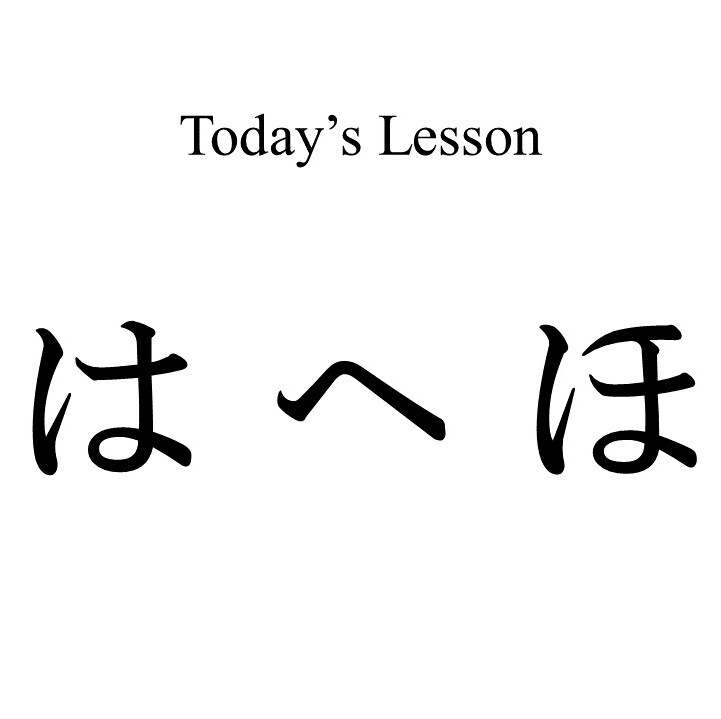
Description of the Japanese Pronunciation は へ ほ
![Picture describing Japanese pronunciation [h]](https://sb-drops.s3.amazonaws.com/drop/rmopt-67e0dcf5f1bd7-999016800-1742789877.gif)
は・へ・ほ consist of the Japanese consonant [h] with the Japanese vowels [a] [e] and [o] respectively. When you pronounce [h], open your mouth in the shape of following vowels, and put air through your glottis. Please note that [h] is a fricative sound which is different from vowels. If you have made [h] sound correctly, you can feel the air coming from your glottis when you place your hand in front of your mouth. [h] is an unvoiced sound.
Does it make sense to you? Let's try to pronounce は へ ほ after the tutor on the video!
Wasabi Japanese Pronunciation Lessons
Words Exercise with the Pronunciation [h] は へ ほ
Please repeat the following words after the tutor on the video.
| Words | Roman Letters | Meanings |
|---|---|---|
| はは | ha ha | mother |
| 春 | ha ru | spring |
| はがき | ha ga ki | postcard |
| はんぶん | ha n bu n | half |
| へた | he ta | poor, bad |
| へん | he n | strange |
| へび | he bi | snake |
| ほん | ho n | book |
| ほか | ho ka | other |
| ほんとう | ho n to u | reality |
Sentences Exercise with the Pronunciation [h] は へ ほ
Please repeat the following sentences after the tutor in the video.
| Japanese Sentences | English Translations |
|---|---|
| 今年は春が早く来ました。 | This year, spring came early. |
| この本を半分読みました。 | I read half of this book. |
| 母に絵はがきを送ります。 | I will send a picture postcard to my mother. |
Tongue Twister Exercise with the Pronunciation [h] は へ ほ
Please repeat the following tongue twisters after the tutor on the video. Also, please focus on the pronunciation practice, not the meaning, because they were made only for the sake of practice.
| Japanese Tongue Twisters | Vocabulary |
|---|---|
|
ふと母と太い豆腐をはふはふ食べる |
母: mother, 太い: thick, 豆腐: food’s name, 食べる: to eat |
|
親も嘉兵衛、子も嘉兵衛、親かへい子かへい、子かへい親かへい。 |
親: parent, 嘉兵衛: person’s name 子: child |
|
ホホホと頬を上げてほほえむ。 |
ホホホ: sound of laughing, 頬: cheek, 上げる: to raise, ほほえむ: to smile |
Conclusion
This is the how to pronounce [h] は へ ほ. We recommend that you practice the sentences above at least 5 times for each exercise, though we understand that pronunciation practice can be dull. Good pronunciation will give you listening and speaking ability, and thereby you will be confident enough to speak Japanese with native speakers. Thus, the ability you gain is well worth the time spent. We are looking forward to seeing you in the next lesson; [ç] ひ.